Too Much Indicators and Too Much Signals? | 美股茶馆 | 美股茶馆

Too Much Indicators and Too Much Signals?

美股茶馆 · 美股茶馆 · 2026-06-18 21:58 UTC · Views: 1
The Future of Trading Is Not More Indicators

Open any trader’s chart today and you’ll probably see the same thing:

RSI.
MACD.
Bollinger Bands.
VWAP.
EMA 9. EMA 20. EMA 50. EMA 200.
Volume profile.
Support and resistance lines everywhere.

And then comes the real problem.

Conflicting signals.

One indicator says buy.
Another says sell.
A third says wait.
A fourth flashes overbought.

So what do most traders do?

They hesitate.
They overtrade.
They miss moves.
Or worse—they enter at exactly the wrong time.

That’s the hidden danger of too much information.

More indicators do not automatically create better decisions.

In many cases, they create noise.


The Real Problem Isn’t Lack of Data

The market gives us endless data.

Price action.
Momentum.
Volatility.
Trend strength.
Sector rotation.
Risk sentiment.
Market breadth.

The challenge isn’t finding more signals.

The challenge is filtering them.

You don’t need 20 indicators fighting each other.

You need a system that answers three simple questions:

Everything else is secondary.


Why Most Signal Systems Fail

Most signal systems fail for one of three reasons.

1. They only look at one timeframe

A 5-minute chart may look bullish while the hourly chart is bearish.

That’s where false entries happen.

2. They react too slowly

By the time a signal confirms, the move is already gone.

3. They lack risk control

Even strong entries fail without disciplined exits.

This is where most systems break.


My Solution: Multi-Timeframe Signal Fusion

Instead of relying on one indicator or one model, I built something different.

A signal architecture that combines:

Each layer serves a unique purpose.


Daily Layer → Direction Bias

This answers the most important question:

Should we even be looking long or short?

This layer defines overall market structure.


Hourly Layer → Trend Confirmation

This tells us whether momentum supports the larger directional bias.

Think of this as the trend engine.


15-Minute Layer → Execution Framework

This is the operational core.

It balances speed and reliability.

Fast enough to react.
Slow enough to filter noise.

This is where high-probability setups begin to form.


5-Minute Layer → Precision Timing

This layer refines entries and exits.

It improves execution quality while reducing unnecessary drawdowns.

The goal is simple:

Better entries.
Better exits.
Better trade efficiency.


The Missing Piece: Risk Control

Even a high-accuracy signal system fails without proper risk control.

That’s why risk management isn’t an add-on in my framework.

It is built directly into the signal engine.

The system constantly evaluates:

The objective isn’t simply to find trades.

The objective is to protect capital while maximizing opportunity.


Real-Time Signals Without Watching the Screen

Here’s something most traders underestimate.

The hardest part of trading isn’t just analysis.

It’s attention.

Markets move fast.
Signals can appear in minutes.
Most people can’t sit in front of charts all day.

And honestly—you shouldn’t have to.

A trading system should work for you.

Not the other way around.

That’s why this signal framework is integrated with real-time Discord notifications.

Whenever the system detects a high-confidence event, members receive instant alerts for:

The alerts arrive in real time.

No chart-watching.
No staring at multiple monitors.
No emotional reactions to every candle.

You can be working.
Studying.
Spending time with family.
Or simply living your life while the system monitors the market continuously.

When opportunity appears, you know.

When risk rises, you know.

That changes everything.

Because successful trading isn’t about staring at charts all day.

It’s about receiving the right information at the right time.


Less Noise, Better Decisions

The final output is intentionally simple.

Not 20 indicators.
Not dozens of alerts.
Not constant confusion.

Just clear, actionable signals.

Simple on the surface.

Complex underneath.

That’s by design.

Because traders don’t need more noise.

They need clarity.


The Future of Trading Is Not More Indicators

It’s better signal intelligence.

Markets are becoming faster.
Noise is increasing.
Emotion remains the biggest enemy.

The edge no longer comes from watching more charts.

The edge comes from building systems that can process complexity and deliver simplicity.

That’s exactly what this signal architecture is designed to do.

And this is only the beginning.

In future posts, I’ll break down how each timeframe contributes to the decision engine—and how multi-layer signal fusion can dramatically improve market timing.
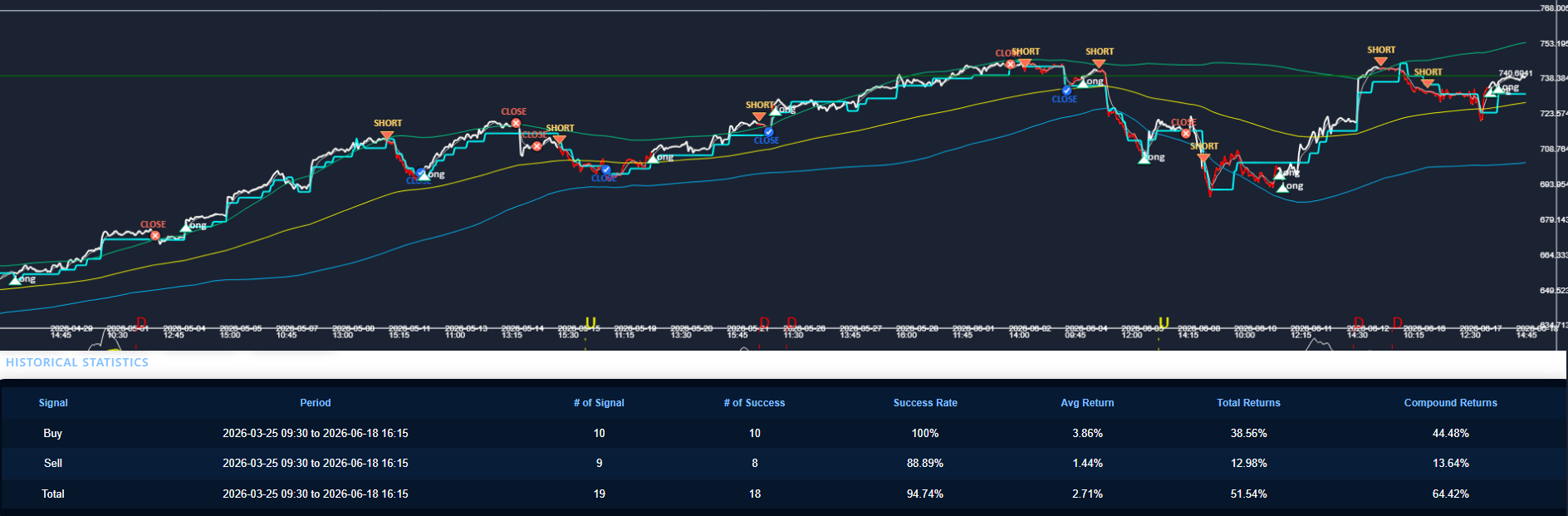
Too many indicators create confusion.

The right system creates conviction.

Welcome to signal intelligence.